Research &
Contextual
Analysis


Analysis of a front cover and contents page- I analysed this front cover and contents page because I need to research the codes and conventions of a both of these examples. Especially an entertainment magazine in which would be more helpful due to the fact that, that is the genre of the magazine that I am doing. I feel like if I research the codes and convention my final product would be able to differ from the normal codes and conventions of a magazine and would be able to show my ideas and make the magazine more unique and memorable to the selective target audience. I chose to do entertainment because I feel like that genre can be more inclusive because there are more careers and subjects people can talk about especially if it is a British pop culture magazine and social media accounts.
History of Bauer Media
[1] Bauer Media Group is Europe’s largest magazine publisher and one of the leading players in Australia, the UK, New Zealand, Poland, and the USA. We publish more than 600 magazines in 20 countries with around 11,500 employees contributing to our success on a daily basis. As a member of the fifth generation, Yvonne Bauer has headed the family business since 2010.
 [1]In 1875, Ludolph Bauer has just turned 23 when he sets up a printing plant in Hamburg to produce business cards. As well as taking on various printing jobs, he launches the local advertising newspaper Rothenburgersorter Zeitung. This is later followed by Extrablatt am Montag and eventually in 1926 by Rundfunk-Kritik – a radio magazine which quickly reaches sales of over a half a million copies weekly.
The publishing house works its way to the top after the Second World War with listing guides and youth magazines. Rasselbande sells 300,000 every fortnight, tv Hören und Sehen reaches one million readers. The magazines Quick, Revue and Bravo become firm fixtures in every German household. In the 1970s, the first weekly women’s magazines are created with tina and Bella. A few years later, Bauer buys a stake in the TV broadcaster RTL II and the radio station Radio Hamburg. After German reunification, the Magdeburg daily Volksstimme is added to the portfolio.
[1]With his leap across the “big pond”, great-grandson Heinz Heinrich Bauer drives the internationalization of the company: in 1981, the Hamburg-based publisher launches Woman’s World as the first weekly women’s magazine in the USA – a million-selling success! The British and Polish markets follow in 1987 and 1991, respectively. The publisher adapts successful German magazines for its readers abroad and launches numerous new brands. Bauer Media’s international activities also extend to the radio business: Polish radio station chain BROKER FM was added in 2007 and Emap’s UK radio stations in 2008. Yvonne Bauer successfully builds on her father’s international strategy: in 2012, Bauer Media Group acquires the publisher ACP in Australia and New Zealand. In 2015, the media company’s expansion continues: with the purchase of the Scandinavian SBS Group, Bauer Media Group becomes Europe’s number 1 radio station operator.
[1]Bauer Media Group enters the digital era in the 1990s. Successful magazine concepts are extended to the Internet establishing cross-media brand families. Print and digital media gel smoothly: for example, the brand world of people magazine heat – launched in the UK in 2000 – naturally includes the online portal heatworld.com and the station heart radio. The Polish search engine and mail provider interia.pl has belonged to Bauer Media Group since 2007. Wunderweib, the digital umbrella brand for our German women’s, people and lifestyle magazines, goes online in 2009. This is followed in 2014 by The Debrief for young women in the UK and the healthcare portal Praxisvita in Germany. The digital sector is also growing in all areas and across all target groups in the USA.
History of Publishing: Era of popular press, Great Britain
[2] The British press was slower to emerge as a popular, sensational medium, but a major turning point came in 1855 when the stamp tax was abolished. This was preceded in 1853 by the abolition of the duty on advertisements, and the more liberal climate exposed a remarkable national appetite for newspapers of all kinds. The abolition of taxes and duties, including that on paper in 1861, brought down the prices of newspapers, and this alone was enough to create what were, for the time, very high circulations. By 1861 sales of the Daily Telegraph had risen to a daily average of 130,000, double that of The Times. Abolition of the tax on paper was said to have brought an additional £12,000 a year to the Telegraph. The Telegraph’s daily circulation exceeded 240,000 by 1877, then the highest in the world. The Telegraph, however, differed greatly from the more colourful New York papers. It was a worthy newspaper, more than half of it being taken up with reports of proceedings in Parliament , but its readers and those of The Times came almost exclusively from the growing mercantile middle class, for whom the two papers provided the writings of many of the best authors of the day at a comfortably affordable price. Journalistic independence was usually upheld, but as the party political hostility between William Ewart Gladstone and Benjamin Disraeli grew sharper, each paper became more partisan, a development that in turn stimulated sales.
[2]Later in the century the British press began to adapt to the demand for less exacting reading matter. In 1888 the halfpenny evening Star was launched by the Irish nationalist politician T.P. O’Connor. Aiming at a wider public than any previous newspaper, the Star incorporated short, lively news items of human interest in a bold, attractive display. The new paper also gave good racing tips, thus endearing it to a group of men who have always contributed substantially to the circulation of what are known in the United Kingdom as the “populars.” Another contemporary evening paper, the Pall Mall Gazette, adopted American tactics for some of its crusades. In a series of articles entitled “The Maiden Tribute to Modern Babylon”, W.T Stead exposed the prostitution of young girls in London by himself procuring one. (Indeed as a result he served a term in jail.) This early example of investigative journalism—in which the reporter creates hard news stories by investigating (sometimes clandestinely and by direct experience from inside) illegal or scandalous activities—led to the passing of the Criminal Law Amendment Act in 1885, which improved the protection of minors. It also highlighted the power of the press to define what is unacceptable to society.
[2]At the turn of the century, popular journalism came into its own in Britain with the rise of Alfred Harmsworth (later Lord Northcliffe), who can be called the first of the British press barons both for his title and for his enduring influence on the press. During his lifetime he owned, at various times, the Daily Mail, the Mirror, The Times, and the Observer. As his first effort, he launched a cheap weekly magazine in 1888, when he was only age 23. Using short sentences, short paragraphs, and short articles, the new style of editing was aimed at attracting a large following among those who had learned to read as a result of the 1870 Education Act that made school compulsory for all British children. In 1894 Harmsworth bought the Evening News, and by combining his editing style with some of the methods of American yellow journalism, he quadrupled its circulation within a year. In 1896 came Harmsworth’s main innovation, the Daily Mail, which within three years was selling more than 500,000 copies a day. This was more than twice the figure reached by any competing paper up to that time. The Daily Mail went on to sell more than one million copies a day during the South African (Boer) War (1899–1902).
[2]As “A Penny Paper for One Halfpenny” the Daily Mail was sold to the reader at a low price only made possible by the paper’s lucrative revenue from advertising. It was the first British paper to be based deliberately on advertising revenue rather than on sales revenue and the first to publish circulation figures audited independently by a chartered accountant. These figures gave advertisers evidence that the Daily Mail was reaching the public in sufficient numbers to warrant increasingly expensive advertising space. Another Mail slogan, “The Busy Man’s Daily Journal,” emphasized the snappy editorial style that followed the Harmsworth dictum of “Explain, simplify, clarify.” This approach guided the new type of journalists known as subeditors, whose job was to rewrite stories in the “house” style, to compose headlines, and, if necessary, to add a little seasoning to the original story.
[2]Another Harmsworth innovation was the tabloid newspaper, which was to revolutionize the popular press in the 20th century. The term tabloid was coined by Harmsworth when he designed and edited an experimental issue of the New York World, produced for New Year’s Day, 1900. The tabloid halved the size of the newspaper page, which allowed easier handling by the reader, but it also suited the new, curtailed size of articles and the more numerous pages required per issue. In the long run, however, the term tabloid has come to define the popular newspaper more in style than in physical characteristics. The first successful tabloid was Harmsworth’s Daily mirror (1903). Originally launched as a newspaper for “gentlewomen,” the Mirror had been a failure, but the tabloid format, together with a halfpenny cover price and numerous photographs, made the new picture paper an immediate success, with circulation running at more than one million copies by 1914. Lord Northcliffe sold the Mirror to his brother Lord Rothermere in 1913. Meanwhile, the equally successful tabloid Daily Sketch had been begun in Manchester in 1909 by Sir Edward Hutlon
[2]Like the American press tycoons, Northcliffe constantly intervened in the production of his newspapers, sending orders under his preferred name of “Chief” to the editors not only of the Mail and the Mirror but also of The Times (from 1908) and the Observer (from 1905), he owned both until his death in 1922. His control over newspaper content was never more obvious than during World War I when the British Official Press Bureau was set up to control the amount of war information available to the public through the newspapers. Accepting that a certain degree of censorship was necessary to conceal military intelligence from the enemy, Northcliffe was nevertheless boldly defied the bureau over its cover-up of an ammunition shortage. Resistance confirmed the independence of the press from government, but the influence of the owners was itself to become an important issue in press freedom. This was typified after World War I by the intensive campaign for Empire Free Trade in Lord Beaverbrooks’s Daily Express. The preservation of the British Empire was the guiding passion of Max Aitken, who had been raised to the peerage as Lord Beaverbrook in 1917. A Canadian-born journalist who took the Express into second place in a national circulation behind the Daily Mirror, Beaverbrook continued to thrust his viewpoint on the editors of his papers for many years, although his campaigns for free trade within the empire and, after World War II, commonwealth trade preference were unsuccessful. Through the Daily Express, the Sunday Express, started in 1918, and the London Evening Standard, acquired 1923, Beaverbrook’s opposition to Britain’s attempts to join the European Economic Community, EEC; later the European Community, which became the primary piece of the European Union, was given a regular airing. Beaverbrook admitted to the first Royal Commission on the Press that if an editor took a divergent view on, for example, the empire, he would be “talked out of it.” So talented was Beaverbrook as a publisher and journalist that the Express newspapers gained and kept many readers for life, even though it is doubtful whether the issues of empire and EEC membership were of passionate concern to them.
[2]Like the American press tycoons, Northcliffe constantly intervened in the production of his newspapers, sending orders under his preferred name of “Chief” to the editors not only of the Mail and the Mirror but also of The Times (from 1908) and the Observer (from 1905), he owned both until his death in 1922. His control over newspaper content was never more obvious than during World War I when the British Official Press Bureau was set up to control the amount of war information available to the public through the newspapers. Accepting that a certain degree of censorship was necessary to conceal military intelligence from the enemy, Northcliffe was nevertheless boldly defied the bureau over its cover-up of an ammunition shortage. Resistance confirmed the independence of the press from government, but the influence of the owners was itself to become an important issue in press freedom. This was typified after World War I by the intensive campaign for Empire Free Trade in Lord Beaverbrooks’s Daily Express. The preservation of the British Empire was the guiding passion of Max Aitken, who had been raised to the peerage as Lord Beaverbrook in 1917. A Canadian-born journalist who took the Express into second place in a national circulation behind the Daily Mirror, Beaverbrook continued to thrust his viewpoint on the editors of his papers for many years, although his campaigns for free trade within the empire and, after World War II, commonwealth trade preference were unsuccessful. Through the Daily Express, the Sunday Express, started in 1918, and the London Evening Standard, acquired 1923, Beaverbrook’s opposition to Britain’s attempts to join the European Economic Community, EEC; later the European Community, which became the primary piece of the European Union, was given a regular airing. Beaverbrook admitted to the first Royal Commission on the Press that if an editor took a divergent view on, for example, the empire, he would be “talked out of it.” So talented was Beaverbrook as a publisher and journalist that the Express newspapers gained and kept many readers for life, even though it is doubtful whether the issues of empire and EEC membership were of passionate concern to them.
[2]The circulation “war of the tabs” that broke out in New York City in the 1920s was copied in Britain in the 1930s, bringing with it numerous circulation-boosting stunts. Prizes for readers had been introduced as early as the 1890s when Harmsworth offered £1 per week for life for the reader who could guess the value of gold in the Bank of England on a given day. In the 1920s one paper offered free insurance to subscribers, but this soon proved too costly to maintain. In 1930 the Daily Herald offered gifts to woo new readers. Although they were condemned by the Newspaper Proprietors’ Association (later known as the Newspaper Publishers Association), gift schemes multiplied against other newspapers, with the Herald eventually achieving a circulation of two million, the highest in the world. Many of the new readers were stolen from other papers, the Daily Mirror saw its figure drop from more than one million to 700,000 by 1934, but newspapers in general acquired 1.5 million new readers so that by the end of the decade there was a national newspaper aimed at every socioeconomic class. The Daily Mirror was revived by its editor, Harry Bartholomew, to become a true working-class paper with a radical political voice, although the winning of new readers, circulation eventually topped four million, was mostly due to the shameless use of the techniques of yellow journalism.
The Culture of Celebrities
Celebrity culture is a high-volume perpetuation of celebrities' personal lives on a global scale. It is inherently tied to consumer interests where celebrities transform their fame to become product brands. [3]. The recent uprising in celebrity culture has increased massively with the help of social media and young children and adults have easy access to these technologies. However, there have been debates on whether this culture has become more harmful in recent years with people arguing that celebrity culture has become worse especially with their harmful paid advertisement for weight loss products with a lot of the younger generation viewing those adverts. Sir Tony Little, Chief Academic Officer at Global Education and Skills (GEMS) claim that celebrity culture is that much of the problem but the way it has changed in recent years. He argues that "Roles models can be healthy, they enhance our personal lives and those of our community" He uses Professor Stephen Hawking as an example saying "Just think of Stephen Hawking and how he focused our minds on his genius but also on his resilience to overcome considerable odds. [4]
Social Media

 When thinking about social media, I wanted to research about the most used social media platforms up to date and how I could use them to my advantage when making a magazine. I was looking at websites and I saw that facebook always ended up being the number one most used social platform. [5] I wanted to include Facebook into the social media platforms that I wanted to use with the magazine but I also have to think about what young people are using too. Using Snapchat has some advantages when using it for business, for example, is easy to interact with the readers when using Snapchat because they can scan your snap code and get instant updates from the business. Which is my idea for the magazine because it is an entertainment magazine, using Snapchat can help promote the business by adding snap codes on the magazines and adverts for the magazines. Also, using Snapchat proves that the magazine brand is up to date with new trends just because they are using Snapchat for their viewers. It shows how modern the brand is. [6] However if I wanted to use Snapchat for advertising I would have to have an advertising budget. I would have to save $10,000 (£7889.25) a month (2017) for an advertising campaign. [7] Due to the fact that the magazine wouldn't be a big, advertising on Snapchat would be very expensive and more likely to lose money than gain money. If I was to use Twitter as an advertising strategy, the brand could be paid for advertising but only when you achieve the marketing goal. You can be paid for pay-for-performance advertising options like page likes or links clicks. You can do it on Facebook too but Twitter is known to be very well known. [8]
Previous Magazine Editors
Beatrix Miller
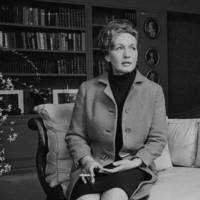 Beatrix Miller began her career as a secretary for The Queen and after the war, she worked with MI6in Germany. Once she started her journalistic career for The Queen, a British society magazine, she started writing features for the magazine before ending her career at the company as a features editor. In 1956, she joined the American editions of Vogue as a copywriter. After The Queen was bought by Jocelyn Stevens in 1958, she was invited to return to the magazine as an editor. Later on, she changed renamed the brand as Queen because she wanted the magazine to be aimed at young woman rather than aimed for the traditional older woman. She became editor of the British edition of Vogue in 1964. As she was retiring, her final issue of the magazine was the largest ever at 470 pages. While she was an editor the magazine had become the "glossy bible to high-fashion'. She ended up retiring in 1984. In 1985, She was appointed Commander of the Order of the British Empire (CBE) for her work and service as editor British Vogue. [9]
Glenda Bailey
 Before Glenda Bailey started in publishing, she had produced a collection for Guisi Slaverio in Italy in 1983. She had been working as an editor of Honey in 1986. She launched a quarterly fashion magazine called FOLIO her time as an editor. in 1988, she was promoted to launch editor of Marie Claire. Marie Claire earned her three Magazine Editor of Year Awards and two Amnesty International Awards for her views and coverage on human right affairs. Then she was named as Editorial Consultant for all 26 editions of Marie Claire. Then from June 1996, she worked as an editor-in-chief for the U.S edition of Marie Claire, before being the same job role in Harper's Bazaar in May 2001. In the 2008 New Year Honours, she was appointed Officer of the Order of the British Empire (OBE) for her work and services to journalism and fashion. Then in 2019, she was advanced to Dame Commander (DBE) in that year's honors. [10]
Comments
Post a Comment